2026-11-15
Women's Hairline Hair Transplant Clinic: The Process for a Natural Change in Impression
This article explains women's hairline hair transplant: common concerns, the procedure, design factors for a natural look, and how results change over time.
Women's Hairline Hair Transplant Clinic: The Process for a Natural Change in Impression

As interest in appearance care has grown recently,
more and more women are also concerned about their forehead hairline,
and that number continues to rise.
Especially when the forehead looks wide
or the hairline is uneven,
it can change the overall impression,
so many people want to correct it.
Against this backdrop,
interest in women's hairline hair transplants
is naturally on the rise.
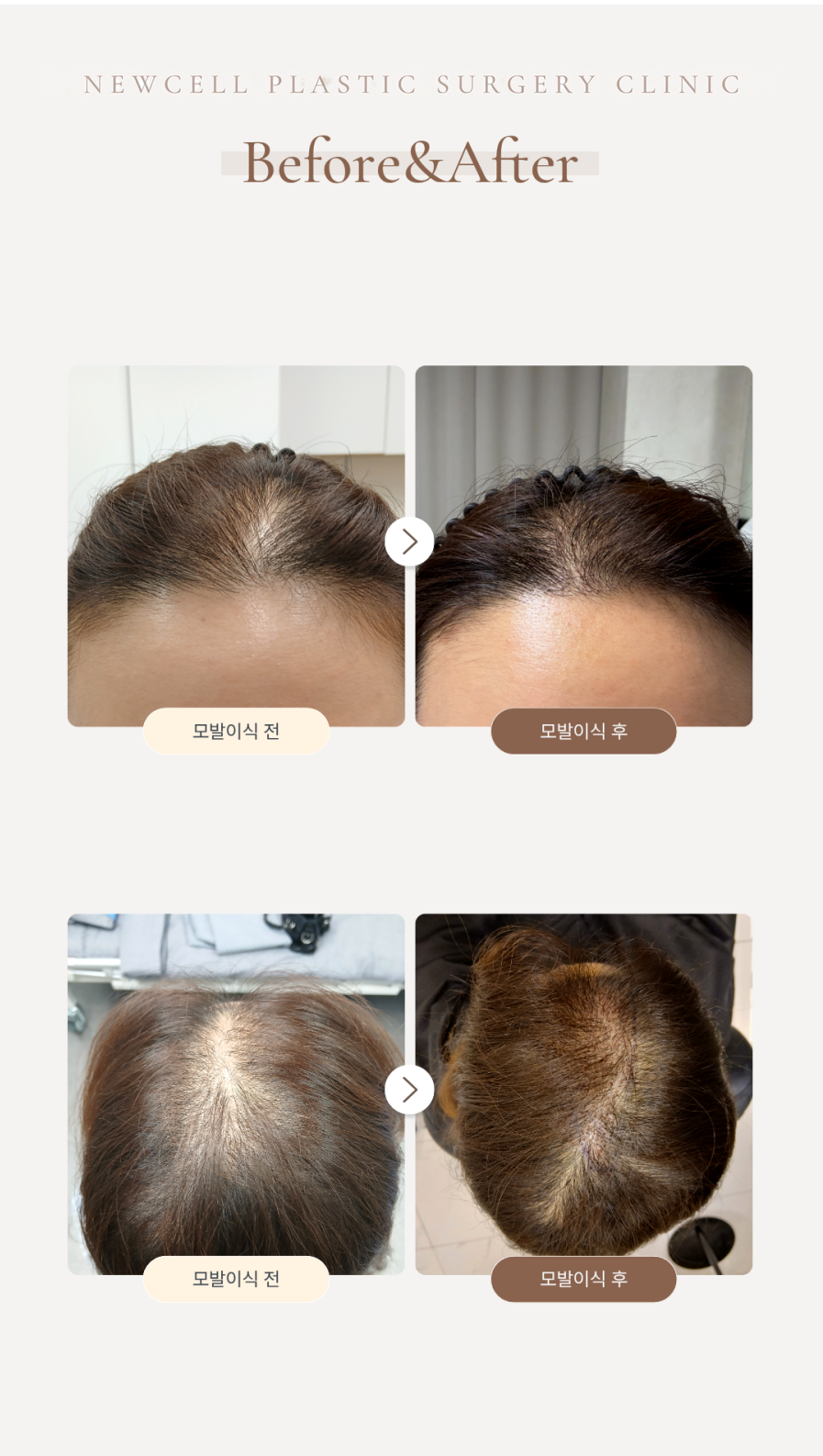
When Should Women Consider a Hairline Hair Transplant?
Unlike men,
women are often more concerned
about the shape of their hairline
than about hair loss at the crown.
Typical examples include:
· When the forehead looks wide,
· When the hairline looks sparse in an M-shape,
· When left-right asymmetry is noticeable,
and others.
In addition to the natural shape of the forehead,
repeated hairstyles that pull the hair back
or lifestyle habits
can make some people feel that their hairline
is gradually being pushed back.
In such cases,
styling alone has its limits,
which can lead to interest in
ways to reshape the hairline itself.
Understanding How a Women's Hairline Hair Transplant Works
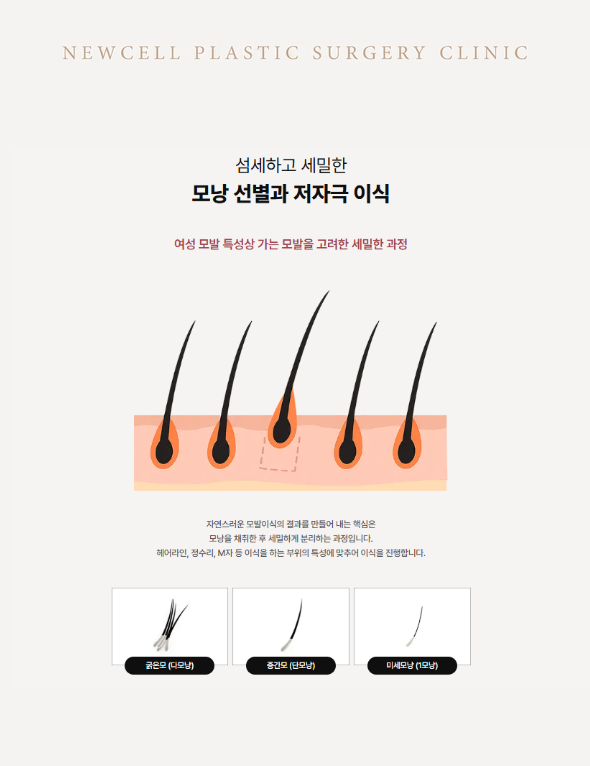
Women's hairline hair transplants
are usually performed by harvesting follicles
from the occipital area (the back of the head)
and transplanting them along the forehead line.
Hair from the occipital area has relatively stable characteristics,
which is why it tends to remain intact after transplantation.
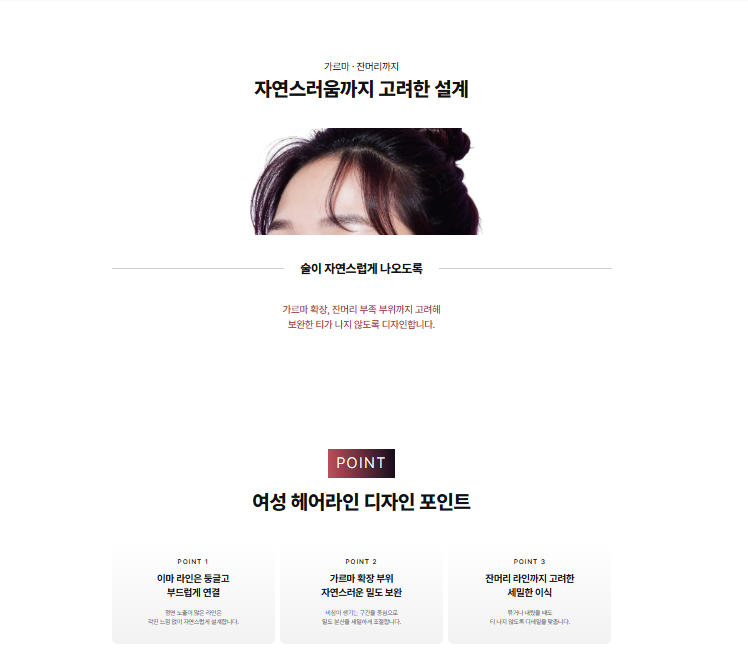
In this process,
the focus is not simply on filling in the hair,
but on the design stage, which is treated as especially important,
taking face shape and the existing hairline into account.
For women in particular,
rather than overly straight lines,
the design often aims to preserve
a natural, curved shape.
The angle and direction of implantation are also important,
as they are factors in achieving a natural-looking result.
Design Elements for a Natural Hairline
In women's hairline hair transplants,
design plays a major role in the final result.
It is not simply about making the forehead look narrower,
but about creating harmony with the overall facial proportions,
which is considered an important factor.
For example,
round and long face shapes
may suit different hairline shapes.
Also,
the center of the forehead and the temple area,
as well as how the M-shaped line is connected,
can change the overall impression.
That is why, considering overall balance,
creating a soft, natural flow
is often described as an important factor.
The Process of Change After a Women's Hair Transplant
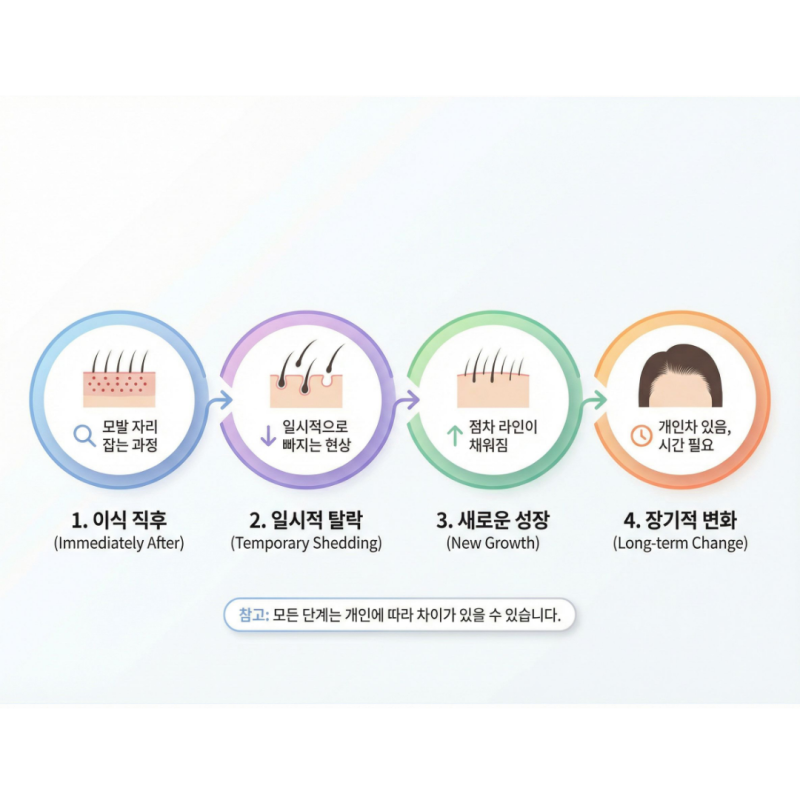
After a women's hairline hair transplant,
changes tend to unfold gradually over time.
Right after the procedure,
the transplanted hair needs time to settle,
and temporary shedding may occur.
After a certain period has passed,
as new hair grows,
the hairline gradually fills in,
and the changes continue from there.
This process can vary from person to person,
which is why
watching the results over time
is described as necessary.
Summary of Women's Hairline Hair Transplant Features
Women's hairline hair transplants
are not simply about adding hair.
Instead, they take an approach aimed at
refining the hairline to soften the overall impression.
The front hairline in particular
is the first part of the face people notice,
so even a small change can noticeably alter one's overall image.
Makeup or styling alone
has its limits in some areas,
so it is sometimes mentioned
as a way to address them.
Women's hairline hair transplants
go beyond simple changes in appearance,
and involve considering the overall balance of one's impression
as part of the process.
Results can differ depending on individual face shape and hair condition,
so it is important
to approach the procedure with a full understanding
of the relevant information.
Recently, various methods and technologies
have been developing alongside one another,
but the most important thing
is understanding the approach that suits your own condition.
We hope you keep this in mind.









Frequently Asked Questions
In what cases should women consider a hairline hair transplant?
Typical cases include when the forehead looks wide, when the hairline looks sparse in an M-shape, or when left-right asymmetry is noticeable. Beyond the natural shape of the forehead, some people also feel their hairline is being pushed back due to repeated hairstyles that pull the hair back or lifestyle habits.
Which area is usually used to harvest follicles for a hair transplant?
Follicles are commonly harvested from the occipital area (the back of the head) and transplanted to the forehead line. This is because hair from the occipital area is relatively stable and tends to remain after transplantation.
What factors are considered in hairline design?
The design stage, which takes face shape and the existing hairline into account, is described as especially important. For women, designs often aim for a natural curved shape rather than harsh straight lines, and the angle and direction of implantation also affect the results.
How do changes appear after a hair transplant?
Right after the procedure, temporary shedding may occur. After a certain period, as new hair grows, the hairline gradually fills in. Since results can vary from person to person, it is generally recommended to monitor progress over time.
Are the results of a women's hairline hair transplant the same for everyone?
No. Results can vary depending on individual face shape and hair condition. That is why it is emphasized that it is important to understand the approach that suits your own situation and to proceed with sufficient information.