2026-11-17
What to Know Before Choosing a Hair Transplant Clinic in Cheongdam-dong
A guide to choosing a hair transplant clinic in Cheongdam-dong, covering why clinic selection matters, incision vs. non-incision methods, consultation prep, and aftercare.

What to Know Before Choosing a Hair Transplant Clinic in Cheongdam-dong
When hair loss progresses,
many people first try shampoos, supplements, and scalp care
hoping to see improvement.
But over time,
as the thinning areas keep spreading
or the hairline starts to recede,
people begin looking for a more fundamental solution.
This is when many people
start researching hair transplant clinics in Cheongdam-dong.
Rather than choosing based on location alone,
it is important to approach the decision with clear, accurate criteria.
Why Does a Hair Transplant Require Careful Selection?
A hair transplant is not simply a form of maintenance,
but a medical procedure that moves hair follicles.
Transplanted follicles
are maintained for many years afterward,
so the initial design and surgical method are extremely important.
In particular, the key factors that make a difference in results include the following:
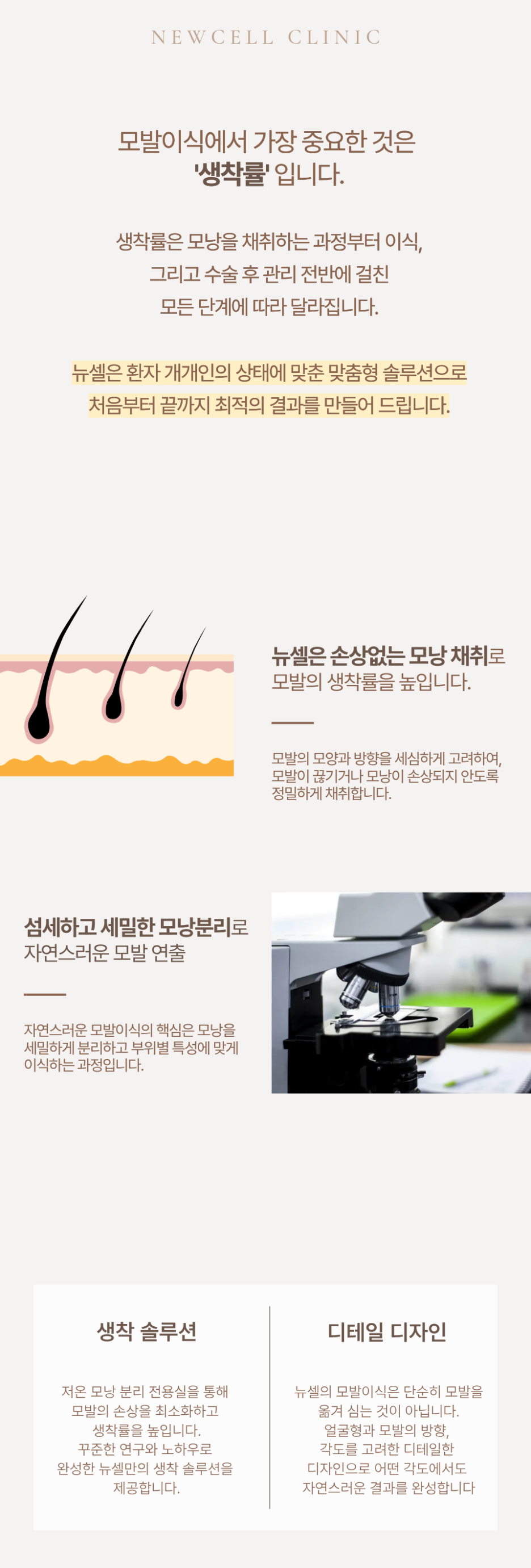
Techniques for harvesting follicles without damaging them
Planning that sets the angle and direction of implantation naturally
Hairline design tailored to each person's face shape
A system that continues into post-operative care
If these factors are not handled properly,
the result may be insufficient density or an unnatural appearance.
Understanding the Differences Between Hair Transplant Methods
Hair transplants are broadly divided into two methods,
each with its own advantages and disadvantages.
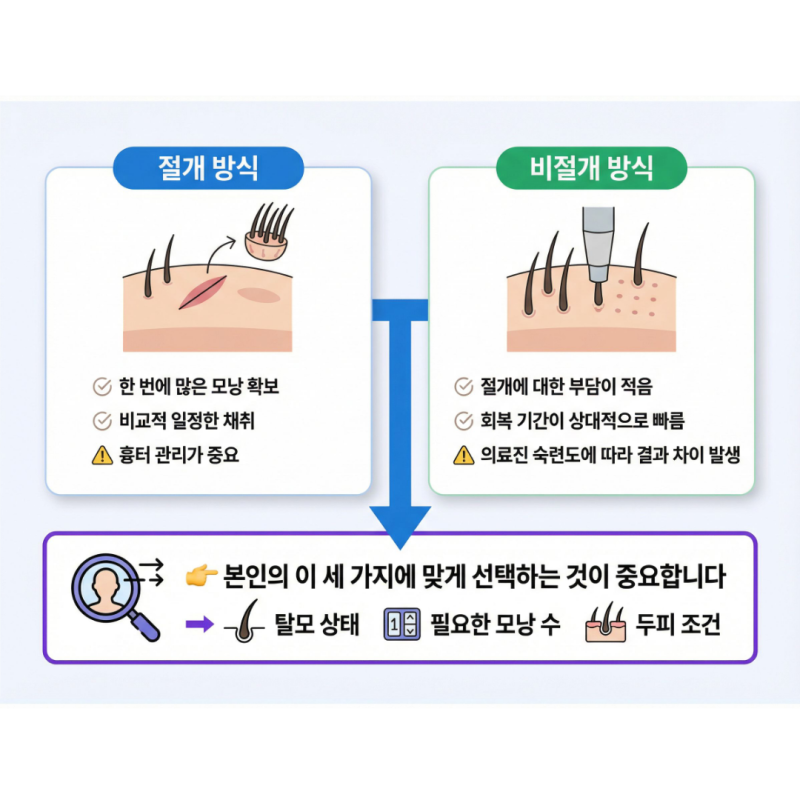
Incision method
A section of the scalp is incised
to harvest hair follicles.
Allows a large number of follicles to be secured at once
Relatively consistent harvesting is possible
Scar management is important
Non-incision method
Hair follicles are harvested one at a time.
Less burden from incisions
Relatively shorter recovery period
Results may vary depending on the skill of the medical team
What matters most is
not so much the method itself,
👉 your current hair loss status, the number of follicles needed, and your scalp condition,
but choosing the option that best fits these three factors.
Cheongdam-dong Hair Transplant Clinic Selection Checklist
When choosing a clinic,
many people decide based only on price or promotional events.
However, the factors that actually affect results
lie elsewhere.
Post-Operative Care Shapes the Results
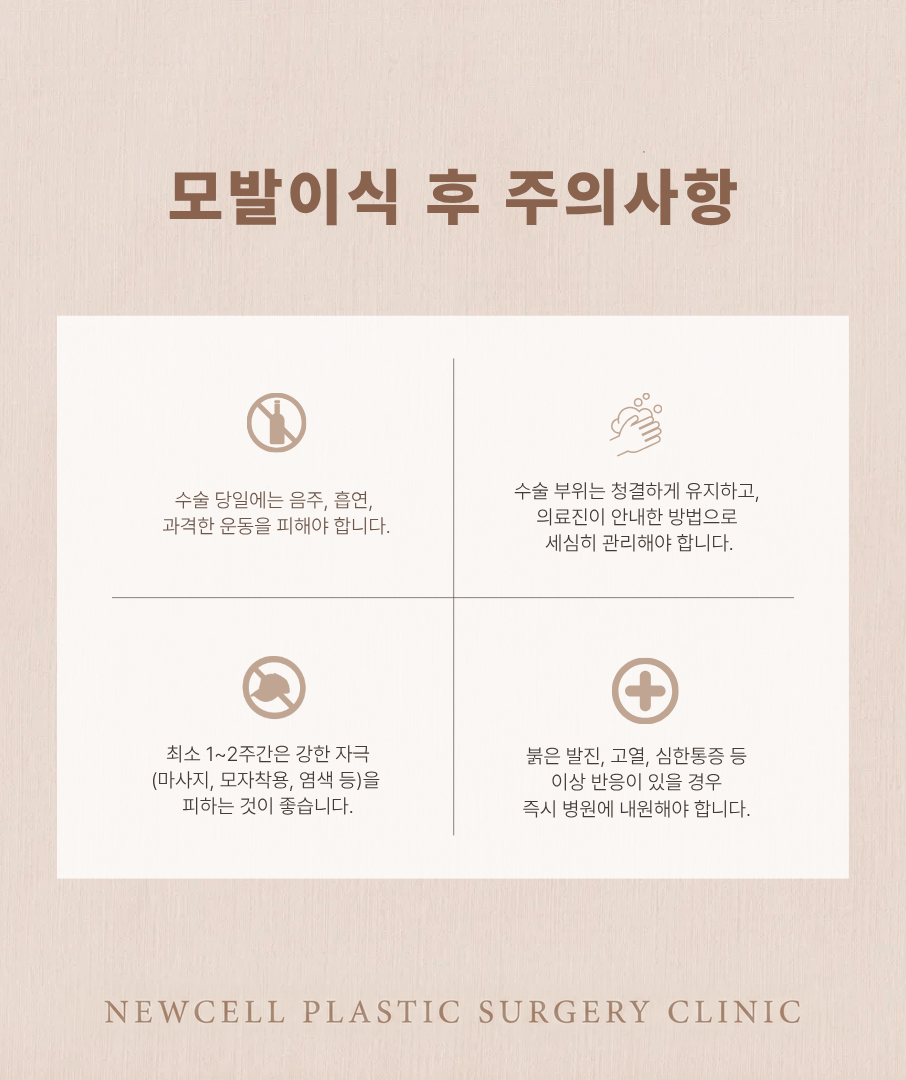
A hair transplant does not end with the surgery itself;
it includes the care process that follows.
In the early stages,
lifestyle habits that minimize scalp irritation,
maintaining a proper washing routine,
and keeping alcohol and smoking in check for a set period
are all important.
Over time,
the transplanted hair gradually takes root.
How this period is managed
can affect the stability of the results.
What to Prepare Before a Consultation
Before visiting a clinic,
there are a few things you can prepare in advance that will help.
✔ Check your current degree of hair loss
✔ Confirm whether there is a family history of hair loss
✔ Organize any previous treatments or hair care experience
✔ Prepare images of the hairline style you want
Having these prepared
can help you set a clearer direction during your consultation.
When choosing a hair transplant clinic in Cheongdam-dong,
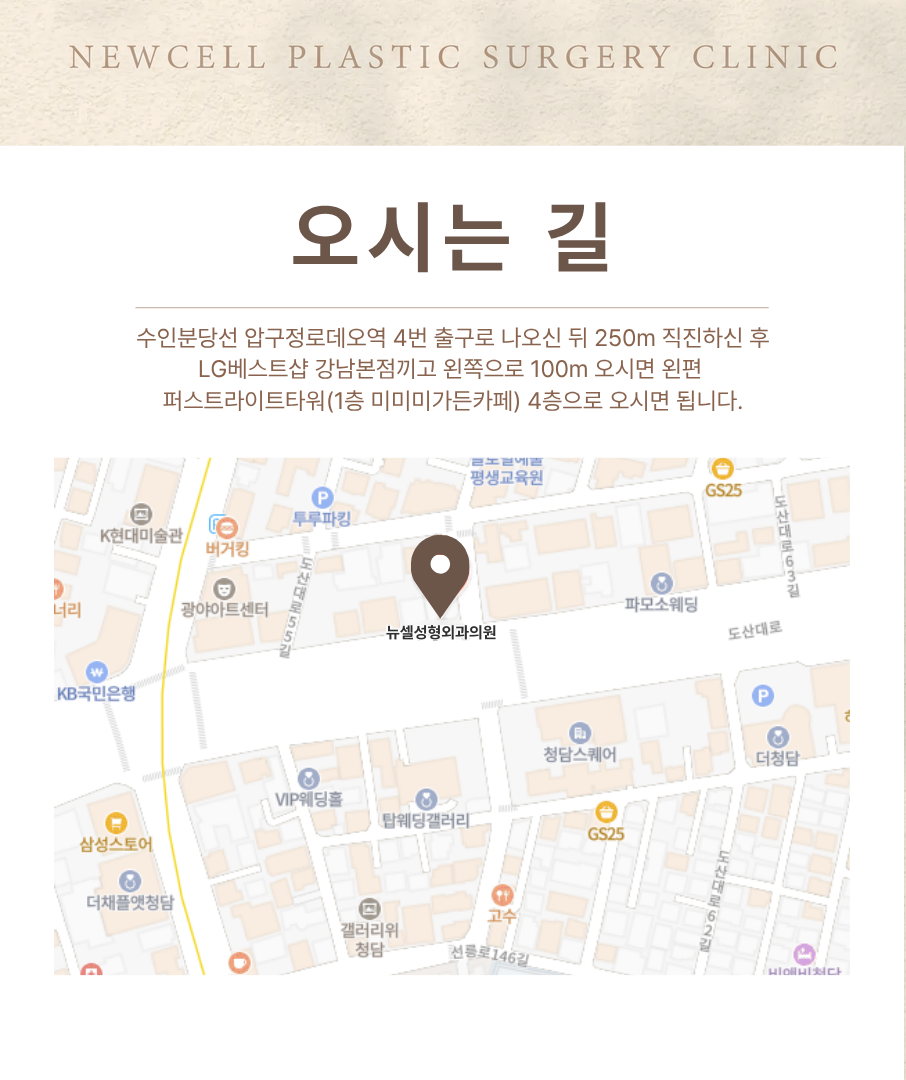
rather than focusing simply on location or image,
👉 the surgeon's experience
👉 design capability
👉 aftercare system
it is important to evaluate based on these three factors.
Because a hair transplant is a single decision
that shapes results for years,
it's essential to compare thoroughly and verify information
before making a careful choice.










Frequently Asked Questions
Why is choosing a clinic important for hair transplants?
A hair transplant is a medical procedure that moves hair follicles, and because transplanted follicles remain for a long time, the choice of clinic matters. Follicle harvesting technique, the design of graft angle and direction, hairline design, and post-operative care all make a difference in results. If these are not handled properly, the outcome may be insufficient density or an unnatural look.
What is the difference between the incision and non-incision methods?
The incision method cuts into a section of the scalp to harvest hair follicles, while the non-incision method harvests follicles one at a time. The incision method allows a large number of follicles to be secured at once, but scar management is important. The non-incision method places less burden on the scalp through incisions and generally has a shorter recovery period, but results can vary depending on the skill of the medical team.
How should I choose a hair transplant method?
Rather than the method itself, it is more important to choose based on three factors: your current hair loss status, the number of follicles you need, and your scalp condition. Each of the incision and non-incision methods has its own pros and cons, so it is best to understand both before deciding.
Why is post-operative care important?
Post-operative care can affect the stability of the results, which is why it matters. In the early stages, it is important to maintain lifestyle habits that minimize scalp irritation, keep up a proper washing routine, and keep alcohol and smoking in check for a set period. Over time, the transplanted hair gradually takes root.
What should I prepare before a clinic consultation?
It helps to organize your current degree of hair loss, family history, and any previous treatment or hair care experience, and to prepare images of the hairline style you want. Doing so can help you set a clearer direction during your consultation.
What criteria should I use to choose a hair transplant clinic in Cheongdam-dong?
Judge clinics by three factors: the surgeon's experience, design capability, and aftercare system. Prioritize these criteria over location or image, and avoid making a decision based solely on price or promotional events.