2026-11-11
Understanding What a 3,000-Hair Men's Hair Transplant Really Means
Explains what a 3,000-hair men's hair transplant really means, including follicle count, typical use cases, density, incision vs. non-incision methods, and cost factors.

Understanding What a 3,000-Hair Men's Hair Transplant Really Means

A men's hair transplant of 3,000 hairs
is not simply about implanting 3,000 individual strands of hair.
On a follicular basis,
it often comes to about 1,200 to 1,500 follicles.
What matters here is not the number itself,
but where and how the hairs are placed.
Even with the same 3,000 hairs,
the results can differ greatly depending on whether the transplant fills the entire forehead,
only fills in the M-shaped areas,
or includes density enhancement as well.

When a 3,000-Hair Men's Hair Transplant Is Needed
The situations in which a 3,000-hair transplant is used
are generally as follows.
When M-shaped hair loss has progressed to some extent,
this hair count is often used to naturally fill in the sparse-looking areas along both sides of the hairline.
It may also be used when the forehead is broad or the hairline is uneven,
with the goal of tidying up the overall hairline.
If you already have hair but it looks thin,
it can also be applied to improve density.
Why Density Matters in a 3,000-Hair Men's Hair Transplant
Many people assume that 3,000 hairs will be dense enough,
but in reality, that is not always the case.
In hair transplant results,
density per unit area matters more than the simple hair count.
Even with the same 3,000 hairs, spreading them over a wide area can make the result look sparse,
while concentrating them in a smaller area can look relatively dense.
This difference has a major impact on how satisfied you are with the result.
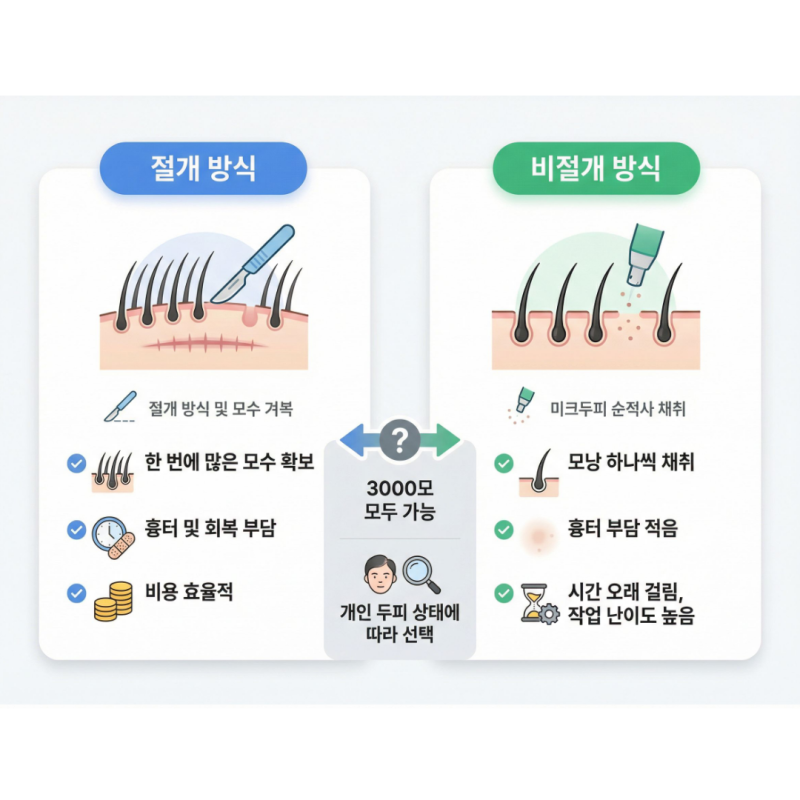
Differences in Methods for a 3,000-Hair Men's Hair Transplant
Hair transplants are broadly divided into two methods.
The incision method
involves cutting a section of the scalp to harvest follicles,
which allows a large number of grafts to be collected in a single session.
However, the burden of scarring and recovery time should also be taken into account.
The non-incision method
harvests follicles one at a time,
so the scarring burden is relatively low.
On the other hand, it takes longer
and is generally more technically demanding.
For around 3,000 hairs,
both methods are possible,
but the choice may vary depending on each person's scalp condition.

Cost Structure of a 3,000-Hair Men's Hair Transplant
The cost of a 3,000-hair men's hair transplant
is not determined by the hair count alone.
Factors that affect the cost include the harvesting method, surgery time, design complexity,
and post-operative care programs, among others.
Even with the same 3,000 hairs,
costs can differ depending on these factors.
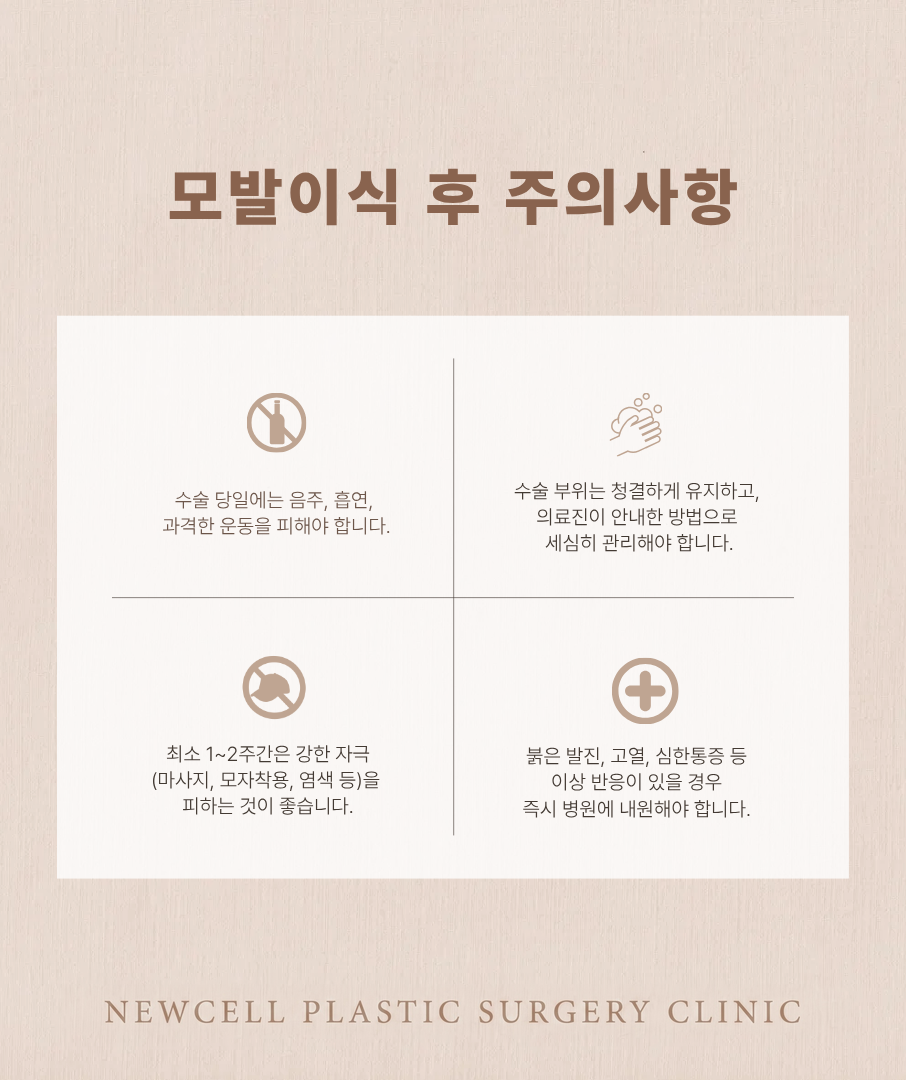
Things to Keep in Mind About a 3,000-Hair Men's Hair Transplant
When considering a hair transplant,
it is worth checking a few key points.
Rather than judging by the hair count alone,
it is important to look at the hairline design and overall balance together.
You should also check whether adequate density is achieved
relative to the size of the area being treated.
Ultimately, what matters
is not the 3,000-hair number itself,
but where and how the hairs are placed.




Frequently Asked Questions
How many follicles are in a 3,000-hair men's hair transplant?
It often corresponds to roughly 1,200 to 1,500 follicles. It is not about implanting 3,000 individual hair strands; when converted to follicular units, it commonly falls within this range.
When is a 3,000-hair transplant needed?
It is mainly used when M-shaped hair loss has progressed to some extent, when the forehead is broad or the hairline is uneven, or when existing hair looks thin. Its goals include filling in the sparse-looking areas on both sides, refining the overall hairline, and improving density.
Is density more important than hair count in a hair transplant?
Yes. According to the article, density per unit area has a greater impact on satisfaction with the results than the hair count alone. Even with the same 3,000 hairs, spreading them over a wide area can look sparse, while concentrating them in a smaller area can look denser.
How do the incision and non-incision methods differ?
The incision method involves cutting a section of the scalp, which allows a large number of grafts to be collected at once, but scarring and recovery time must be considered. The non-incision method harvests follicles one at a time, so the scarring burden is relatively low, but it takes longer and is generally more technically demanding.
Is the cost of a hair transplant determined by hair count alone?
No, it is not determined by hair count alone. According to the article, factors such as the harvesting method, surgery time, design complexity, and post-operative care programs can all affect cost.
What should I check before a hair transplant?
It is advisable to review the hairline design and overall balance together, and to confirm that adequate density is achieved for the size of the treatment area. Rather than judging by hair count alone, it is important to look at where and how the hairs are placed.