2026-11-04
Men's Hair Transplant: Everything You Need to Know
A plain-language guide to men's hair transplants, covering the causes of male hair loss, FUT vs. FUE methods, graft counts, costs, recovery timeline, and how to choose a clinic.

Men's Hair Transplant: Everything You Need to Know in One Place

Whenever you look in the mirror and feel self-conscious about your hairline, or notice that your crown looks thin, you've probably searched for men's hair transplants at least once. When hair loss medications and scalp care haven't produced results, more and more men are considering hair transplantation as a more direct solution. Today, we'll walk you through everything, from how men's hair transplants work to the procedure methods, costs, and recovery process. 😊
Why Does Male Hair Loss Happen?
The most common type of male hair loss is male pattern hair loss (androgenetic alopecia). The main cause is that testosterone, a male hormone, is converted into DHT (dihydrotestosterone), which shrinks the hair follicles.
The main causes and contributing factors are as follows.
Genetic factors: If one of your parents has hair loss, your risk of developing it increases.
Male hormone imbalance: The more sensitive your hair follicles are to DHT, the faster hair loss tends to progress.
Stress and lack of sleep: Chronic stress can disrupt the hair growth cycle.
Improper scalp care: A poor scalp environment has a direct impact on hair follicle health.
Nutritional imbalance: Deficiencies in protein, iron, zinc, and other nutrients can worsen hair loss.
Hair loss progresses at different speeds for each person, and there are often multiple contributing causes. Before considering a men's hair transplant, it's important to accurately identify the cause of your hair loss and how far it has progressed.

How Does a Men's Hair Transplant Work?
A hair transplant involves harvesting hair follicles from the occipital region (the lower back of the head), which is rarely affected by hair loss, and transplanting them into the areas where hair has thinned. Follicles from the donor area are highly resistant to DHT, so the likelihood of hair loss recurring after transplantation is low.
There are two main procedure methods.
🔹 FUT (Incision Method)
This method involves making a linear incision in part of the scalp and harvesting follicular units. Because a large number of follicles can be collected at once, it is well suited to widespread hair loss. However, a linear scar may remain at the incision site.
🔹 FUE (Non-Incision Method)
This method uses a specialized tool to harvest follicles one at a time. It leaves almost no scarring and tends to offer a faster recovery. Recent advances, including robot-assisted FUE and motorized FUE, have also improved precision.
Which method is more suitable depends on a combination of factors, including the extent of hair loss, the hair density of the donor area, and the number of follicles needed.

How Many Grafts Are Needed?
The number of grafts needed depends on the extent of hair loss and the density you want to achieve. The general reference guidelines are as follows.
Hairline correction: approx. 1,000 to 2,000 grafts
M-shaped hair loss: approx. 1,500 to 3,000 grafts
Crown hair loss: approx. 1,000 to 2,500 grafts
Widespread hair loss: 3,000 grafts or more
However, the number of follicles that can be transplanted is limited by the density and condition of the donor area, so it's important to check what is feasible through a detailed pre-procedure examination.

What Cost Should You Expect?
The cost of a men's hair transplant varies depending on the number of grafts, the procedure method, the size of the clinic, and the surgeon's experience. Pricing is often based on a per-graft rate, and total costs can range from several million won to well above that.
Rather than choosing a clinic based on price alone, it's worth considering the surgeon's experience, how well they manage graft survival rates, and their aftercare system. Choosing a clinic just for a low price can backfire if the results are unsatisfactory, since a revision procedure may end up costing more.
What Does Recovery Look Like After the Procedure?
Recovery after a men's hair transplant generally follows the timeline below.
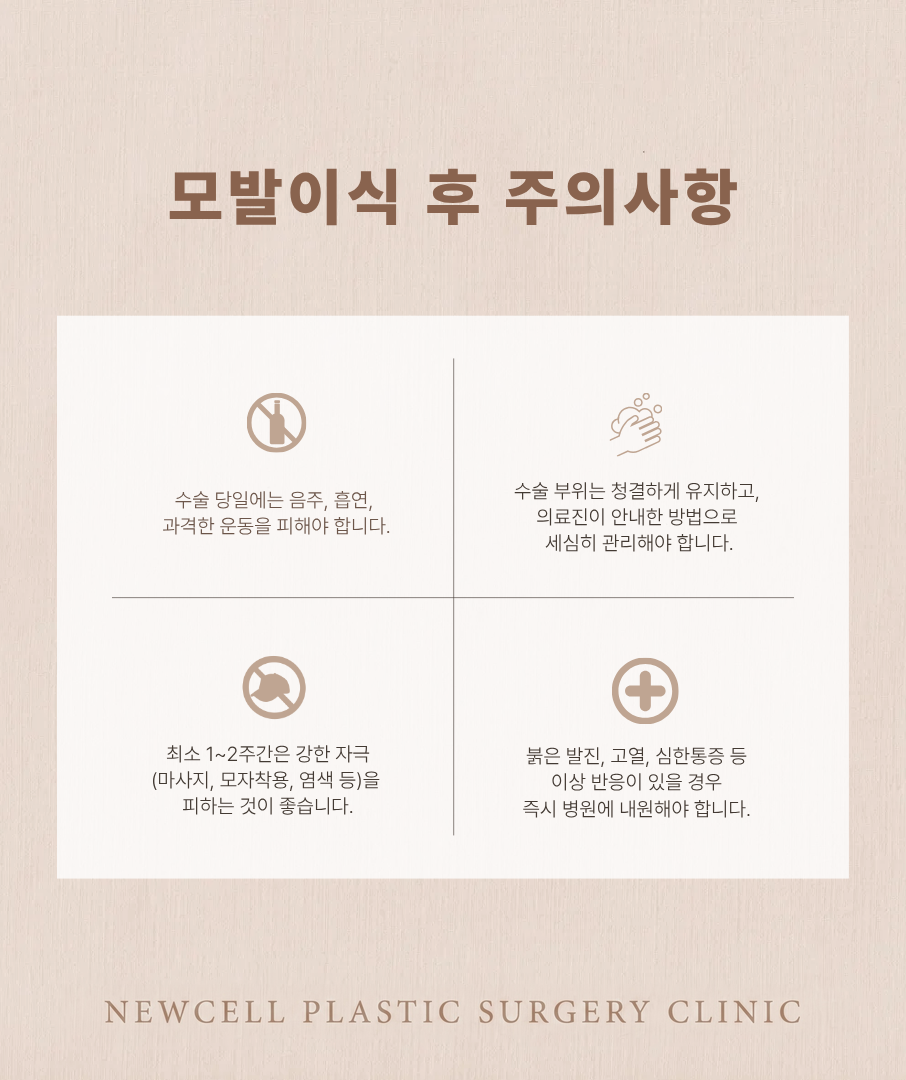
Immediately after the procedure to 1 week: Scabs may form at the transplant site and the donor area, and some swelling may occur.
It is important to minimize irritation to the scalp and take your prescribed medications consistently.
2 to 4 weeks: The transplanted hair may fall out, a process called shedding. This is a natural part of the process, as the follicles enter a new growth cycle.
3 to 6 months: New hair begins to grow back, thin and short. This is often the most anticipated and impatient stage, so it's important to wait patiently.
6 to 12 months: Hair thickness and density gradually settle in, and you can see the full results.

What to Check When Choosing a Clinic
Because the results of a men's hair transplant last a long time, choosing the right clinic at the start is extremely important.
✔ Whether the procedure is performed directly by a hair loss specialist
✔ Whether a detailed examination of your scalp and hair follicles is conducted before the procedure
✔ Whether there is a graft survival management and aftercare program
✔ Whether they thoroughly consult with you on your hairline design plan
✔ Whether they give you realistic guidance without overstating the expected results
We recommend comparing these points carefully before making your decision. 😊
⚠️ The effectiveness of a hair transplant, the number of grafts needed, and the recovery period can vary greatly depending on your individual hair loss progression, scalp condition, and overall health. Be sure to consult a specialist before the procedure to confirm which method is right for you.




Frequently Asked Questions
How does a men's hair transplant work?
Hair follicles are harvested from the occipital region (the lower back of the head), which is rarely affected by hair loss, and transplanted to the areas where hair has thinned. Because the harvested follicles are highly resistant to DHT, the likelihood of hair loss recurring after transplantation is low.
What types of hair transplant methods are there?
The two main methods are FUT (Incision Method) and FUE (Non-Incision Method). FUT involves a linear incision in the scalp and can collect a large number of follicles at once, making it suitable for wide areas, but it may leave a linear scar. FUE harvests follicles individually, leaving almost no scarring and generally offering a faster recovery.
How many grafts are typically needed?
It depends on the extent of hair loss and the density you want to achieve. As general reference guidelines, hairline correction requires about 1,000 to 2,000 grafts, M-shaped hair loss about 1,500 to 3,000 grafts, crown hair loss about 1,000 to 2,500 grafts, and widespread hair loss 3,000 grafts or more. Since the density and condition of the donor area can be a limiting factor, it's important to confirm this through a detailed pre-procedure examination.
How much does a men's hair transplant cost?
Pricing is often based on a per-graft rate, and total costs can range from several million won to well above that. Costs vary depending on the number of grafts, the procedure method, the size of the clinic, and the surgeon's experience. Rather than choosing based on price alone, it's recommended to also look at the surgeon's experience and aftercare.
What does recovery look like after the procedure?
Full results are typically visible 6 to 12 months after the procedure. During the first week, scabs and swelling may occur, and at 2 to 4 weeks the transplanted hair may shed, which is a natural process. Between 3 and 6 months, new hair begins to grow back thin and short.
What should I look for when choosing a clinic?
It's advisable to check whether the procedure is performed directly by a hair loss specialist and whether your scalp and hair follicles undergo a detailed examination beforehand. You should also look at graft survival management, aftercare programs, hairline design consultation, and whether the clinic gives you realistic expectations about results.