2026-11-09
How to Improve Hair Transplant Graft Survival: A Complete Guide to Pre- and Post-Operative Care
A complete guide to improving hair transplant graft survival, covering key factors, first-48-hour care, habits to follow and avoid, and normal post-op shedding.
How to Improve Hair Transplant Graft Survival: A Complete Guide to Pre- and Post-Operative Care

What Is Hair Transplant Graft Survival Rate?
One of the most frequently asked questions from people considering a hair transplant is, “What is the graft survival rate?” The graft survival rate refers to the percentage of transplanted follicles that settle into the new scalp and actually grow hair.
Generally, when performed by experienced medical professionals, the average graft survival rate is known to be around 80–95%. However, results can vary depending on post-operative care and each person’s scalp condition. For this reason, pre- and post-operative care is just as important as surgical technique.
Key Factors Affecting Graft Survival
① Follicle Harvesting and Implantation Technique
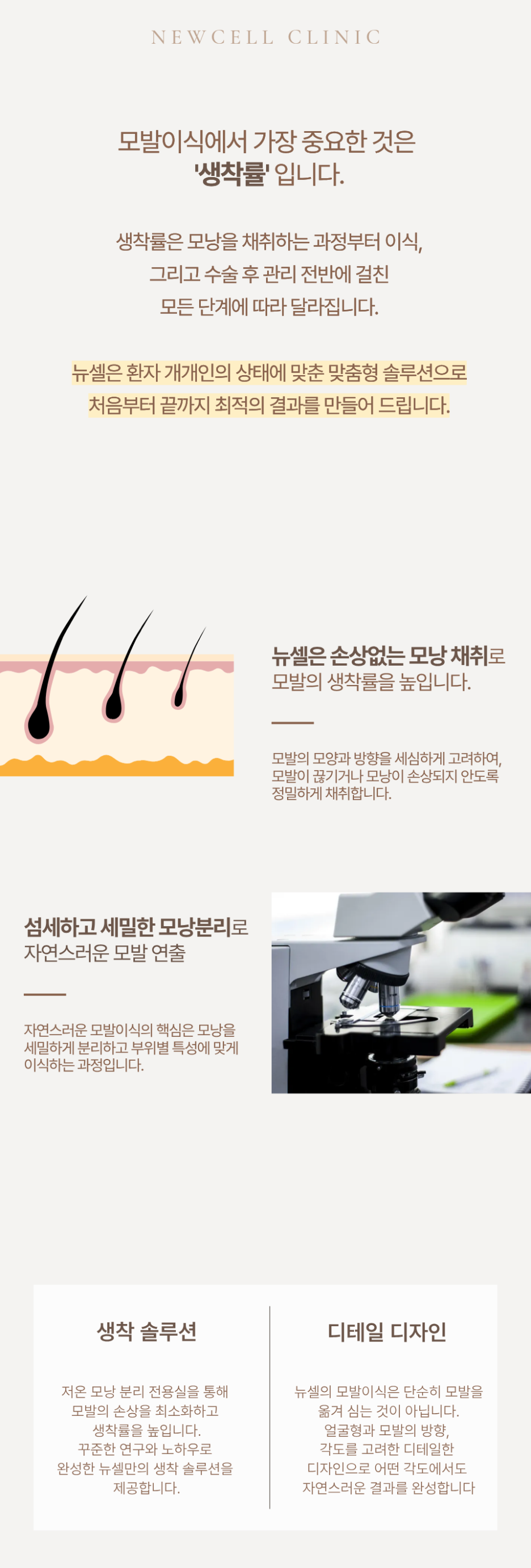
The two main hair transplant methods are FUE (non-incisional) and FUT (incisional). The shorter the time follicles are exposed outside the body, and the more precise the implantation density and angle, the higher the graft survival rate. The surgeon’s experience and the operating environment are the key variables that determine graft survival, so minimizing physical damage to the follicles during implantation is essential.
② Scalp and Follicle Health
The condition of the scalp before surgery also affects graft survival. If there is inflammation or severe seborrheic dermatitis on the scalp, or if nutritional status is poor, adequate treatment and management should be completed before surgery. Smokers may experience lower graft survival due to reduced blood circulation, so quitting smoking is recommended at least two weeks before surgery.
③ Initial Care on the Day of Surgery
The 24 to 48 hours immediately after transplantation are the most critical period for graft survival. During this time, never touch or scratch the transplanted area, and avoid strong shower water pressure and any other physical irritation. When sleeping, use a higher pillow or maintain a semi-upright position so that the transplanted area does not touch the pillow.
Practical Tips for Improving Graft Survival
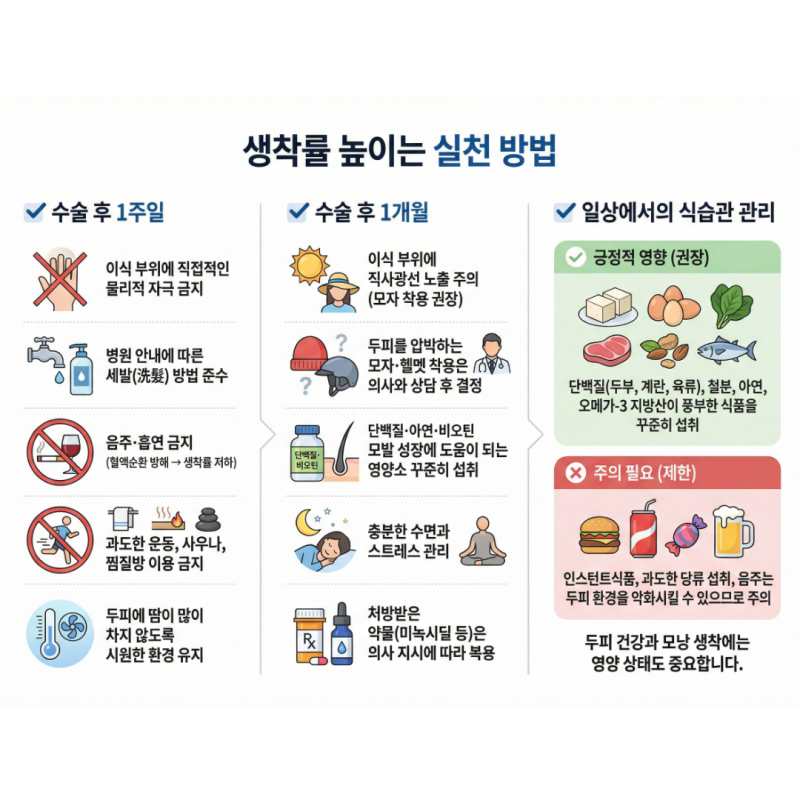
✔ One Week After Surgery
No direct physical stimulation to the transplanted area
Follow your clinic’s instructions on hair washing
No drinking or smoking (impairs blood circulation → lowers graft survival)
Avoid excessive exercise, saunas, and jjimjilbang (Korean heated bathhouses)
Maintain a cool environment to prevent excessive sweating on the scalp
✔ One Month After Surgery
Protect the transplanted area from direct sunlight (wearing a hat is recommended)
Consult your doctor before wearing a hat or helmet that presses on the scalp
Consistently consume nutrients that support hair growth, such as protein, zinc, and biotin
Get adequate sleep and manage stress
Take prescribed medications (such as minoxidil) as directed by your doctor
✔ Everyday Dietary Habits
Nutritional status is also important for scalp health and follicle engraftment.
Consistently eating foods rich in protein (tofu, eggs, meat), iron, zinc, and omega-3 fatty acids may have a positive effect on follicle recovery.
Conversely, instant foods, excessive sugar intake, and alcohol can worsen the scalp environment, so caution is needed.
⚠️ Be Sure to Avoid These
Action to Avoid | Reason
Drinking or smoking after surgery | Reduced blood circulation raises the risk of follicle necrosis
Scratching or touching the transplanted area | Causes follicles to shed
Excessive exercise or sweating | Increased risk of inflammation and infection
Strong sun exposure | Damages the scalp and interferes with graft survival
Hair dyeing or perming right after surgery | Chemicals can damage the follicles

Can Hair Grow Back After Shedding? — A Guide to Post-Transplant Telogen Shedding
It is common for transplanted hair to shed 2 to 4 weeks after surgery. This is known as “post-transplant telogen shedding” and is a normal part of the process. If the follicles themselves are still alive, new hair typically begins to grow 3 to 6 months after surgery, and final results are usually visible around 12 months post-op. Anxiously checking or irritating the transplanted area during this period can actually interfere with graft survival, so be careful.
✔ Graft survival in hair transplantation depends as much on post-operative habits as it does on surgical technique.
✔ Quitting smoking and alcohol, proper hair-washing methods, a balanced diet, and adequate rest all come together to create the optimal environment for graft survival.
✔ Please follow your medical team’s instructions carefully, and enjoy satisfying results through consistent lifestyle improvements.
✔ If you are considering a hair transplant, please have a thorough consultation and choose the approach that suits you best.
※ This content is intended to provide general medical information. Surgical results may vary depending on individual scalp condition, health status, and surgical method. Please consult a qualified medical professional for details.

Frequently Asked Questions
What is the typical graft survival rate for hair transplantation?
Generally, when performed by experienced medical professionals, the average graft survival rate is known to be around 80–95%. However, results may vary depending on post-operative care and individual scalp condition.
Is care in the first few days after transplantation the most important?
Yes, the 24 to 48 hours immediately after transplantation are considered the most critical period for graft survival. During this time, avoid touching or scratching the transplanted area, and avoid strong shower water pressure and other physical irritation. When sleeping, use a higher pillow so that it does not touch the transplanted area, or maintain a semi-upright position.
When should I quit smoking before a hair transplant?
Quitting smoking at least two weeks before surgery is recommended. Smoking reduces blood circulation and can lower graft survival rates. It is also best to avoid drinking and smoking after surgery.
Is it normal for hair to fall out after transplantation?
Yes, transplanted hair may shed 2 to 4 weeks after surgery. This is called post-transplant telogen shedding and is a normal process. If the follicles are still alive, new hair usually starts to grow 3 to 6 months after surgery, and final results can generally be confirmed around 12 months post-op.
What should I be careful about one month after surgery?
Protect the transplanted area from direct sunlight, and wearing a hat is recommended. Consult your doctor before wearing a cap or helmet that presses on the scalp. It is also important to consistently consume nutrients such as protein, zinc, and biotin, get adequate sleep, and manage stress.
Can I dye or perm my hair right after a hair transplant?
No, avoid dyeing or perming immediately after surgery, as chemical ingredients can damage the follicles and interfere with graft survival. Drinking and smoking, excessive exercise, and strong sun exposure should also be avoided.