2026-11-06
How to Choose a Hair Transplant Clinic in Seoul: Know This First to Avoid Regret
A guide to choosing a hair transplant clinic in Seoul, covering FUE vs. FUT methods, five key checkpoints like surgeon involvement and aftercare, and typical costs.
Know How to Choose a Seoul Hair Transplant Clinic First to Avoid Regret
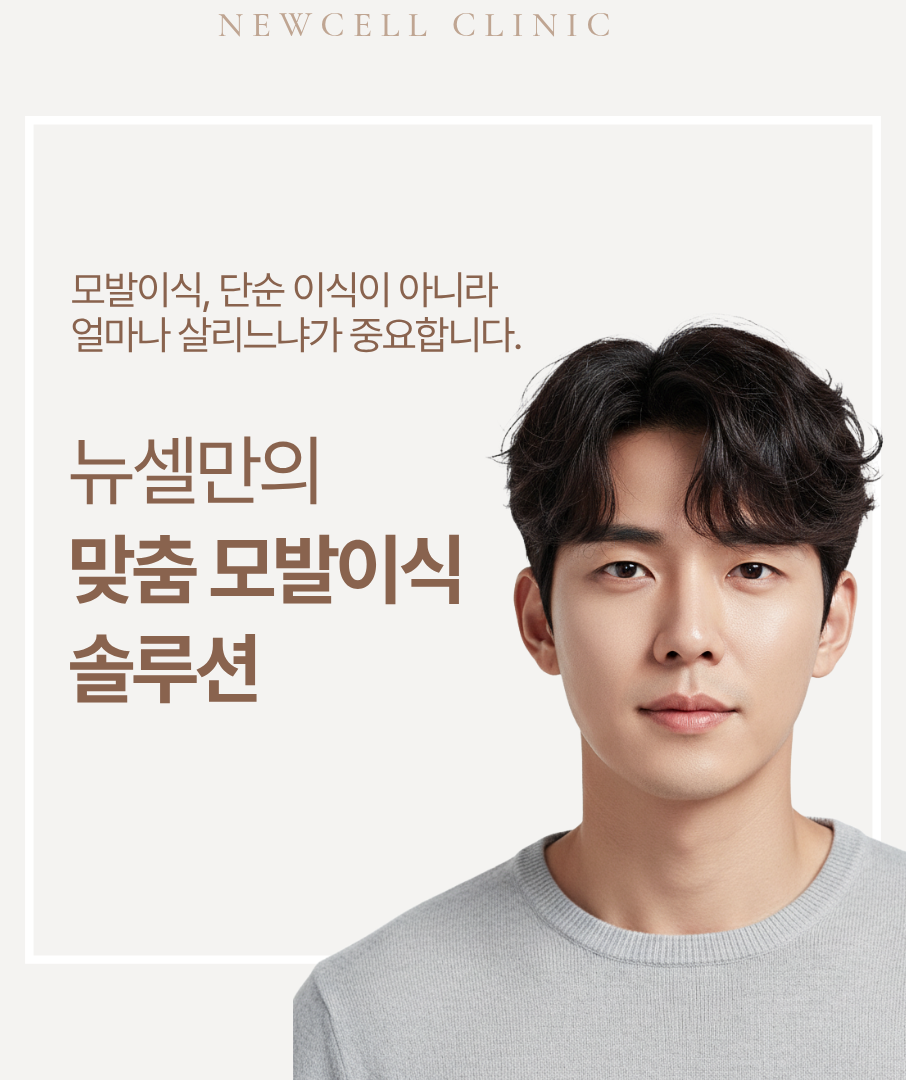
Once hair loss starts to bother you,
it's only natural to start searching for hair transplants.
But once you start looking, there are so many clinics
that many people feel overwhelmed about where to even begin.
Today, we'll go over the key points to check
when choosing a hair transplant clinic in Seoul,
along with our recommended criteria.
What Are the Hair Transplant Methods?
There are two main hair transplant methods.
Non-Incision (FUE) Hair Transplant
This method extracts follicles one by one
without cutting the scalp.
Because it leaves almost no scarring and offers faster recovery,
it is the most widely chosen method these days.
Incision (FUT) Hair Transplant
This method involves cutting a strip of scalp from the back of the head
to harvest follicles.
Because a large number of follicles can be obtained at once,
it is sometimes chosen when the transplant area is large
or a high graft count is needed.
Rather than one method being better than the other,
a specialist should determine the right approach
based on your hair loss and scalp condition.
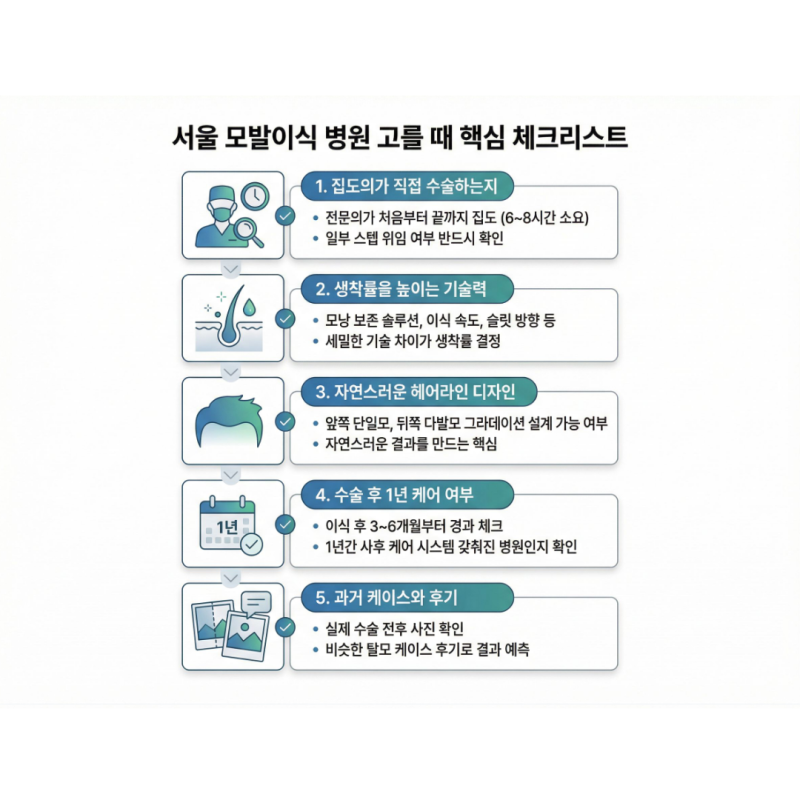
Key Checklist for Choosing a Seoul Hair Transplant Clinic
Seoul has a huge number of hair transplant clinics,
spread across areas such as Gangnam, Apgujeong, Sinsa, and Jongno.
When choosing a clinic, be sure to check the following items.
1. Whether the surgeon performs the procedure personally
A hair transplant takes six to eight hours.
Make sure to confirm whether a specialist performs the entire procedure from start to finish,
or whether parts of it are delegated to staff.
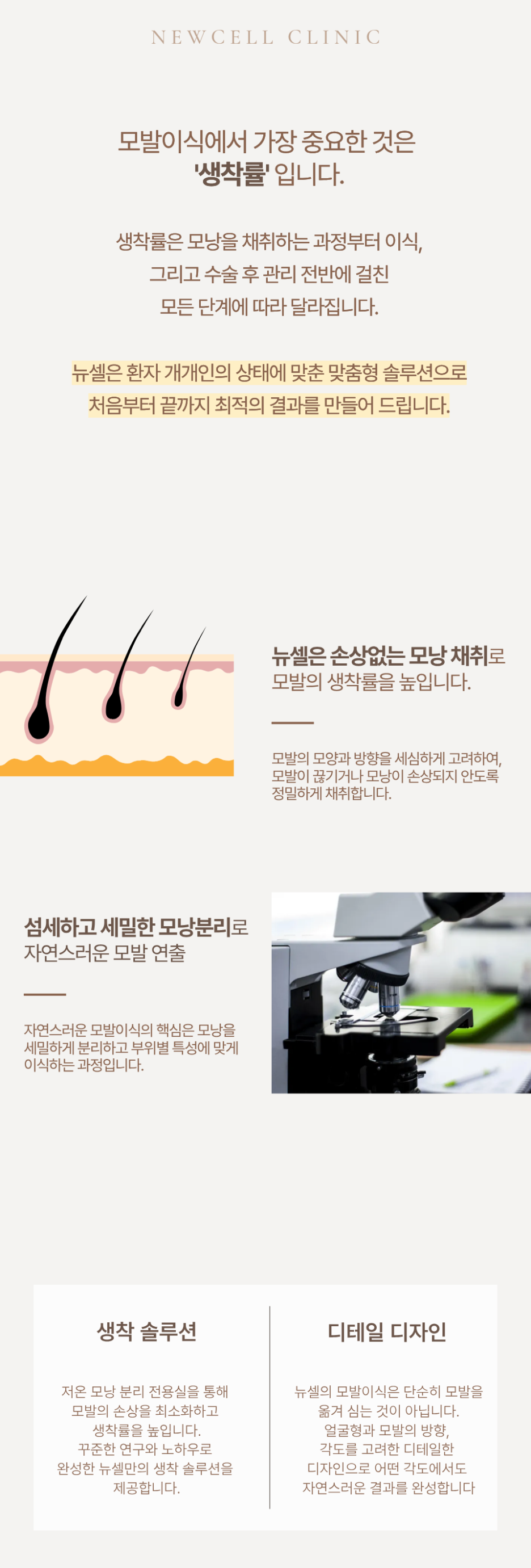
2. Technical skill that improves graft survival rate
How well the harvested follicles take root largely determines the outcome.
Subtle technical differences, such as follicle preservation solutions,
transplant speed, and slit direction, determine the graft survival rate.
3. Natural hairline design
Check whether the clinic can plan a gradient design,
transplanting differently based on hair thickness,
such as single hairs at the front and multi-hair grafts toward the back.
This is the key to creating a natural-looking result.
4. Whether one-year post-operative care is provided
Transplanted hair sheds shortly after the procedure
and begins to regrow after three to six months.
Because progress needs to be closely monitored for about a year,
check whether the clinic has a solid aftercare system.
5. Past cases and reviews
Reviewing real before-and-after photos and reviews from patients with similar hair loss
can help you gauge what results to expect.

Seoul Hair Transplants Are Right for People Who: - Have advanced M-shaped hair loss - Have visible thinning at the crown - Have a hairline that has receded significantly - Feel that medication alone is no longer enough - Want to restore hair in scarred areas
In the early stages of hair loss,
medication alone can often slow its progression significantly.
However, if a considerable number of follicles have already been lost,
a hair transplant may be a realistic option.
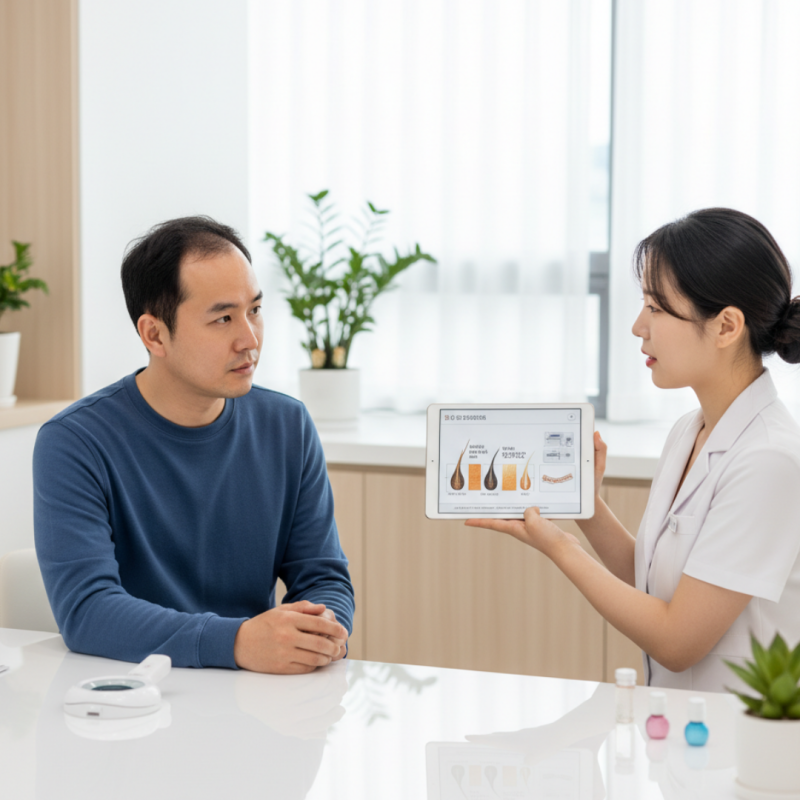
How Much Does a Hair Transplant Cost?
Hair transplant costs vary depending on the number of grafts being transplanted.
In Seoul, for approximately 2,000 grafts, prices generally range from 2 to 4 million KRW,
and there can be considerable price differences between clinics.
What matters most is looking at surgical skill and aftercare together
rather than simply going for the cheapest option.
Because a hair transplant is hard to undo once it's done,
it's worth taking the time to choose carefully.
When choosing a Seoul hair transplant clinic,
don't just go by whether it's famous or close by.
Compare clinics based on these four criteria:
direct surgery by a specialist,
a high graft survival technique,
natural design planning,
and thorough aftercare.
Even a consultation can give you a good sense of a clinic's standard.
Comparing consultations at several clinics is also a good approach.
※ Hair transplantation is a medical procedure, and results may vary depending on individual scalp condition, extent of hair loss, and overall health.
Be sure to make your decision after thorough consultation with a specialist.


Frequently Asked Questions
How should I choose a hair transplant clinic in Seoul?
It's best to compare clinics based on whether the surgeon performs the procedure personally, the surgical skill used to improve graft survival, natural hairline design, and whether one-year aftercare is provided. Rather than choosing a clinic simply because it's famous or nearby, it's also recommended to compare consultations at several clinics.
What are the types of hair transplant methods?
Hair transplants are broadly divided into two methods: non-incision (FUE) and incision (FUT). FUE extracts follicles one at a time without cutting the scalp, leaving almost no scarring. FUT removes a strip of scalp from the back of the head to obtain a large number of follicles at once.
How is the hair transplant method determined?
It's difficult to say that one method is better than the other. A specialist should decide based on your hair loss and scalp condition. When the transplant area is large or many grafts are needed, the incision method may be chosen.
How much does a hair transplant cost in Seoul?
For about 2,000 grafts in Seoul, costs generally range from 2 to 4 million KRW, and prices differ considerably between clinics. Because cost depends on the number of grafts, it's important to consider surgical skill and aftercare together rather than simply choosing the cheapest clinic.
How long does a hair transplant take?
A hair transplant takes six to eight hours. For this reason, it's essential to confirm whether a specialist performs the entire procedure from start to finish or delegates parts of it to staff.
When does transplanted hair start growing again?
Transplanted hair sheds shortly after the procedure and begins to regrow after three to six months. Since progress should be carefully monitored for about a year, it's wise to check whether the clinic has an aftercare system in place.