2026-11-03
Female Crown Hair Transplant: What to Know Before the Procedure
A guide to female crown hair transplants covering causes of hair loss, FUT vs. FUE methods, the recovery timeline, and tips for choosing a clinic.

Female Crown Hair Transplant: What to Know Before the Procedure

Many people think hair loss is only a concern for men, but the number of women experiencing hair loss is steadily rising. In particular, among women in their 30s to 50s, more and more are concerned about thinning hair at the crown or a noticeably widened part line.
If medication has not produced results, or if hair loss has progressed to a certain degree, some women consider a female crown hair transplant. Today, we'll walk through everything from how the procedure works to the recovery process. 😊
Why Does Female Crown Hair Loss Happen?
Female crown hair loss is mostly female pattern hair loss (androgenetic alopecia). Unlike male pattern baldness, where the hairline recedes, it typically progresses with hair thinning centered on the crown and part line, causing the scalp to become gradually more visible.
The main causes are as follows.
Genetic factors: If there is a family history of hair loss, the likelihood of developing it increases.
Hormonal changes: Hair loss may be accelerated as estrogen levels decline around pregnancy, menopause, or perimenopause.
Severe stress and fatigue: Physical and mental stress can affect the hair growth cycle.
Nutritional imbalance: Deficiencies in iron, protein, or vitamin D can worsen hair loss.
Scalp conditions: Scalp disorders such as seborrheic dermatitis and folliculitis are also linked to hair shedding.
Since hair loss often has multiple causes, an accurate diagnosis should come first before simply considering a procedure.
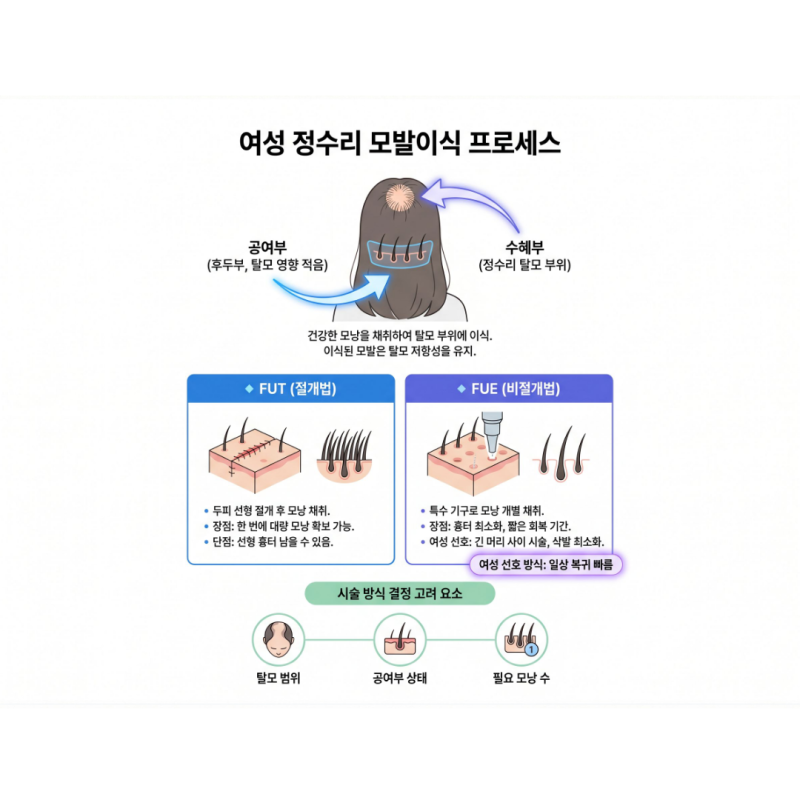
How Does a Female Crown Hair Transplant Work?
A hair transplant involves harvesting hair follicles from the occipital area (the lower back of the head), which is rarely affected by hair loss, and transplanting them to the thinning crown. Because transplanted follicles retain the characteristics of the donor area, they are generally less likely to be affected by hair loss again after the procedure.
There are two main techniques.
🔹 FUT (Incision Method)
A strip of the scalp is cut, and follicles are harvested from that section. This allows a large number of follicles to be collected at once, but a linear scar may remain at the incision site.
🔹 FUE (Non-Incision Method)
Individual follicles are harvested one at a time using a specialized tool. Scarring is minimal and recovery time is generally shorter. Because the procedure is performed among longer hair in women, the non-incision method, which doesn't require much hair to be cut, is often preferred.
The method is chosen after considering the extent of hair loss, the condition of the donor area, and the number of follicles needed.
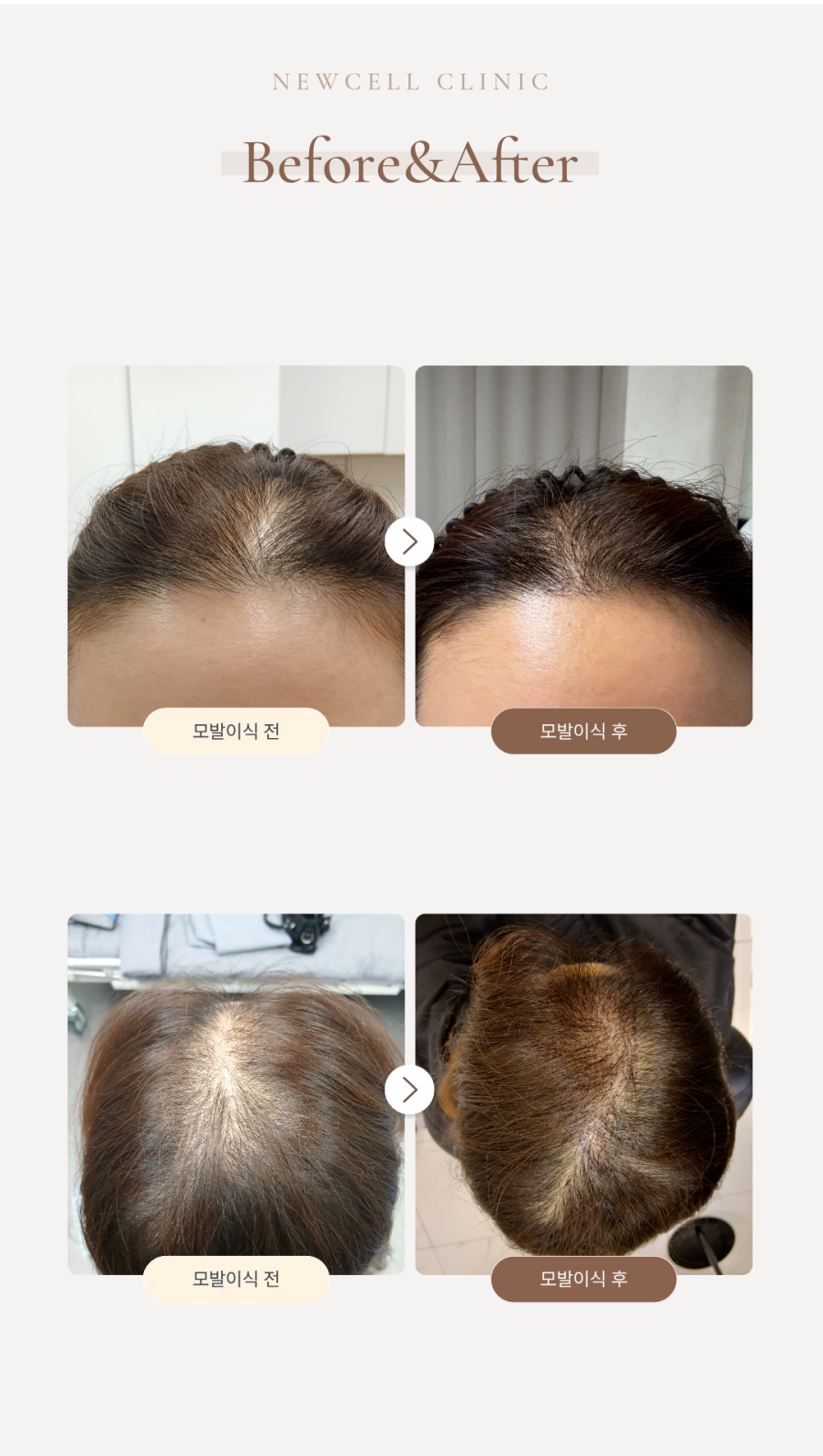
🙋♀️ Can Women Also Get a Hair Transplant?
Yes, but different criteria apply than for men. Because female hair loss can cause thinning even in the occipital area, where hair loss does not usually progress, a thorough examination to confirm there is enough donor area for follicle harvesting is the first priority.
In addition, if medical causes such as hormonal imbalance, nutritional deficiency, or scalp conditions are present, it is generally recommended to treat the underlying cause first before considering a hair transplant. Performing the procedure without resolving the cause may affect graft survival.
Whether a female crown hair transplant is suitable and how extensive it should be depends on a comprehensive assessment of the stage of hair loss, hair density, scalp condition, and overall health, so results vary from person to person.

What Is the Recovery Process Like After the Procedure?
The recovery process after a hair transplant generally proceeds as follows.
Immediately after the procedure to 1 week: Scabs may form at the transplant site, and swelling may occur. During this period, it is important not to irritate the scalp.
2–4 weeks: The transplanted hairs shed. This is a normal part of the process as the follicles enter a new growth cycle, so there is no need to be alarmed.
3–6 months: New hair begins to grow gradually. During this time, the hair typically comes in thin and short.
6–12 months onward: As the transplanted hair fully grows, the final results become visible. This is when density and thickness settle in.
Because the crown is a highly visible area, planning the natural direction, angle, and density of the hair is extremely important. We recommend reviewing the design plan thoroughly through a detailed consultation before the procedure. 🌱

What to Check When Choosing a Clinic
Female crown hair transplants require delicate technique, so choosing the right clinic and medical team is important.
✔ Is the physician experienced in hair transplants for female hair loss?
✔ Is a detailed examination of the scalp and follicle condition performed before the procedure?
✔ Is there a program for graft survival management and post-procedure care?
✔ Do they give realistic guidance without exaggerating expected results during consultation?
It's a good idea to check these points carefully before making a decision. 😊
⚠️ The effectiveness, recovery period, and suitability of a hair transplant may vary depending on individual hair loss status, health condition, and follicle condition. Be sure to consult a specialist before the procedure to determine the approach that is right for you.




Frequently Asked Questions
Can women also get a crown hair transplant?
Yes, it is possible. However, different criteria apply than for men. Because thinning can extend to the occipital area, a thorough examination to confirm there is enough donor area for follicle harvesting is the first priority.
Why does female crown hair loss occur?
The main causes include genetic factors, hormonal changes, severe stress and fatigue, nutritional imbalance, and scalp conditions. Multiple factors often act together, so an accurate diagnosis is needed first.
What is the difference between FUT and FUE?
FUT involves cutting a strip of the scalp to harvest follicles, while FUE uses a special tool to harvest follicles one at a time. FUT can collect a large number of follicles at once but may leave a linear scar, whereas FUE leaves minimal scarring and generally has a shorter recovery period.
What does recovery look like after the procedure?
Scabbing and swelling may occur during the first week after the procedure. Around 2–4 weeks, the transplanted hairs shed, which is normal. The full results can be seen after 6–12 months.
What should I check when choosing a clinic?
It is advisable to confirm that the physician has sufficient experience with female hair loss transplants and that a detailed examination of the scalp and follicle condition is performed before the procedure. It is also worth checking whether there is a graft survival management and post-care program, and whether the clinic provides realistic expectations without overstating results.
Is treating the underlying cause necessary before a hair transplant?
If there are medical causes such as hormonal imbalance, nutritional deficiency, or scalp conditions, treating the cause first is generally recommended before considering a hair transplant. Performing the procedure without resolving the cause may affect the survival of the transplanted hair.